Riley Shoemaker
Barry Goldwater High School, Class of 2025
VV: When did you take the TSMC /GCU MSI Course and what interested you in the program?
RS: I was interested in computers when I was younger, so the semiconductor process was really interesting to me. I wanted to learn more about the chips that power my tech devices, like my phone and laptop. I signed up on grad day, before walking across the stage!
VV: How many hours a day/week did the program take and how did you manage your time?
RS I did the summer program; 4 days a week (M-Thu), 6 hours of classes; for 11 weeks. It wasn’t difficult to fit into my schedule. It was very manageable. While completing the program, I was still able to keep my part-time job. By the time I started the MSI program, I had already graduated high school.
VV: What are some examples of some of the learning/projects you were involved in via the program?
RS: My favorite part of the program was touring TSMC Arizona to learn about the semiconductor process. Senior executives at TSMC met with us to answer our questions about the company. It was a great way to see how the MSI coursework would apply to the daily job. It solidified my interest in working at TSMC! After the tour we took a quiz on the material at GCU.
VV: How did the coursework prepare you for a job at TSMC?
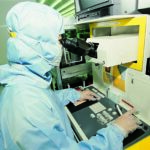
RS: I learned so much about the semiconductor process, which allowed me to better understand the importance and function of my job as an etch tools technician. The coursework allows you to decide if you like semiconductors, and working at TSMC allows you to decide if you like working with semiconductors. I am passionate about both.
VV: What does a typical work day/week and schedule look like for you now at TSMC, and how do you like working in the semiconductor industry?
RS: I work 12 hour shifts (6 a.m.–6 p.m.) 4 days a week, followed by 3 days off. I like the schedule because it gives me a lot of downtime to rejuvenate and decompress before starting work again. I enjoy my job because of the urgency and attention to detail it requires. My team and I bond over the shared responsibility of contributing to the making of a wafer.
VV: What would you say to students who may be considering the program?
RS: When choosing a career path, it was important for me to choose something that could withstand AI. If that’s also important to you, I recommend entering the semiconductor industry, because so many of the operations require human input. This makes me feel comfortable about the stability of my career path. I think the MSI program offers a unique chance to figure out if you would enjoy working with chips.
VV: How was the program a good fit for your career goals, and where do you plan to take your career from here?
RS: I want to become a process engineer. In fall of 2026, I will start my electrical engineering degree at ASU while working at TSMC. The experience I’ve had with the MSI program has been a valuable precursor to my undergrad degree. I think it will give me a unique perspective when I start at ASU, because I will already feel connected to the work and industry. The program also helped me figure out what I don’t like. This is important because there are many different things you can do with an electrical engineering degree, so this experience has allowed me to narrow it down.